Autonomous cyber defence for military systems using cognitive AI agents
Autonomous cognitive agents that defend military systems against cyber attack.
The Challenge
Military operational platforms and networks face cyber attacks at machine speed, in environments where skilled cyber personnel are scarce and connectivity back to central security operations cannot be guaranteed. Dstl’s research agenda — including its Autonomous Resilient Cyber Defence innovation focus — seeks self-defending, self-recovering concepts: systems that can detect, decide and act against attacks autonomously, reducing the burden on human operators.
The Solution
For Dstl, NquiringMinds developed ACoSA — Autonomous Cognitive Security Agents: autonomous, resilient cyber-defence intelligent agents capable of cognitive decision-making for defending systems in defence and security contexts. The work drew on NQM’s trusted-data and AI capabilities to give agents the situational data, inference and policy machinery needed to reason about threats and respond without continuous human direction.
Outcomes
The work was delivered in full over twelve months (July 2022 – June 2023) with Dstl technical monitoring (Bethann Coleman, Duncan Hodges), and sits within NQM’s broader defence AI portfolio alongside MAXAD and BAE INTeACT IAMD, where the same autonomous, trust-scored data techniques are applied to naval combat systems and defence supply-chain capability.
In Detail
Autonomous cognitive agents that defend military systems against cyber attack.
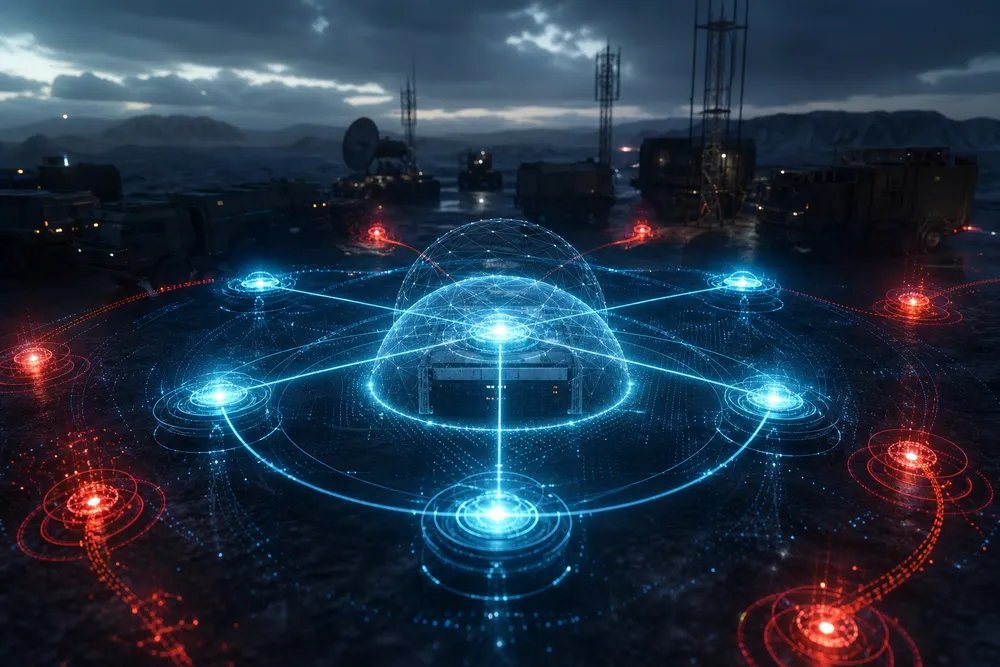
Military platforms and networks face cyber attacks at machine speed, in environments where skilled cyber personnel are scarce and connectivity back to central security operations cannot be guaranteed. ACoSA — Autonomous Cognitive Security Agents — delivers resilient cyber-defence intelligent agents capable of cognitive decision-making: they detect, decide and act against attacks autonomously, reducing the burden on human operators.
Core benefits
- Autonomous decision-making — agents assess threats and select defensive actions without continuous operator input.
- Machine-speed response — attacks are met faster than human-in-the-loop processes allow.
- Resilience — agents are designed to continue defending and recovering systems while under attack.
- Trusted reasoning — situational data, inference and policy machinery let agents reason about threats within defence security constraints.
Features

Autonomous cyber-defence intelligent agents ("cognitive security agents") for defence and security systems.

Agents assess threats and select defensive actions without continuous operator input.

Agents designed to continue defending and recovering systems under attack.

Cognitive-agent approach combining NQM's trusted-data platform with autonomous cyber-defence reasoning for military contexts.
Benefits

Reduced operator burden and faster-than-human response to cyber attacks on defence systems (design intent; formal outcomes not captured).

Established NQM's autonomous cyber-defence agent capability, feeding into follow-on defence AI work (MAXAD, BAE INTeACT IAMD).

Delivered a 100%-funded DASA/Dstl R&D contract (ACC2029270) in full.
Volt features used

AI as first-order elements — fast

ML anomaly detection, pattern recognition and threat identification

configurable and dynamic policy

bearer agnostic

advanced NIST compliant security

confidence scoring and continuous assurance — trust as a graded, computed measure

