Business rates revenue optimisation for local government using AI analytics
Recovering £500,000 in uncollected business rates for Belfast City Council.
The Challenge
Business rates provide more than half of Belfast City Council’s annual revenue, funding services from bin collections to leisure facilities. Timely, accurate rates collection — and maintaining an up-to-date register of businesses in the city — is hard: properties get misclassified, businesses change use, and under-collected rates directly reduce the funding pot for public services across the Northern Ireland Executive.
The Solution
NQM applied its secure data platform to bring together the council’s internal business-rates datasets with open data (e.g. Companies House, planning, mapping), then applied AI and statistical techniques to identify anomalies — such as properties likely misclassified for business rates — prioritising them for investigation. The system added workflow management, inspection prioritisation and mobile workflow tools so analytic leads translated into collection action.
Outcomes
Selected by Belfast City Council (working with NI Department of Finance LPS and Future Cities Catapult) against competition from across the UK and Europe, the work progressed from an initial proof of concept to full development, and in a two-week trial identified approximately £500,000 of previously uncollected business rates — a recurring year-on-year revenue stream.
In Detail
Using data to optimise business rates collection.
Business rates analytics helps local authorities strategically manage and plan the collection of business rates. It provides tools for workflow management, inspection prioritisation and mobile workflow. Sophisticated AI analytics processes are applied across a large set of datasets to intelligently predict properties that are likely to be misclassified — increasing the accuracy of information on the occupiers of properties and helping to identify uncollected rates revenue. The platform is in use with Belfast City Council.
Core benefits
- Secure — state-of-the-art digital certificate-based security.
- Privacy — fine-grained permission levels ensure only the right people access sensitive information.
- Targeted Inspections — optimise rates collected by prioritising properties where revenue is most likely to be missing.
- Operational Efficiency — maximise the number of inspections performed with intelligent neighbourhood-based inspections.
- Improved Data Quality — digital workflow captures data at the source, minimising errors during transcription.
- Dynamic Scheduling — planning may be altered on the fly as new data is collected from inspections in the field.
Data import. The data import module is a back-end system that enables the import of data from diverse data sources. It includes data cleaning and matching functions which allow different input datasets to be mapped to a standardised format (or schema) that powers the underlying application and analytics. The system supports both automated and manual data imports, from either APIs or file uploads.
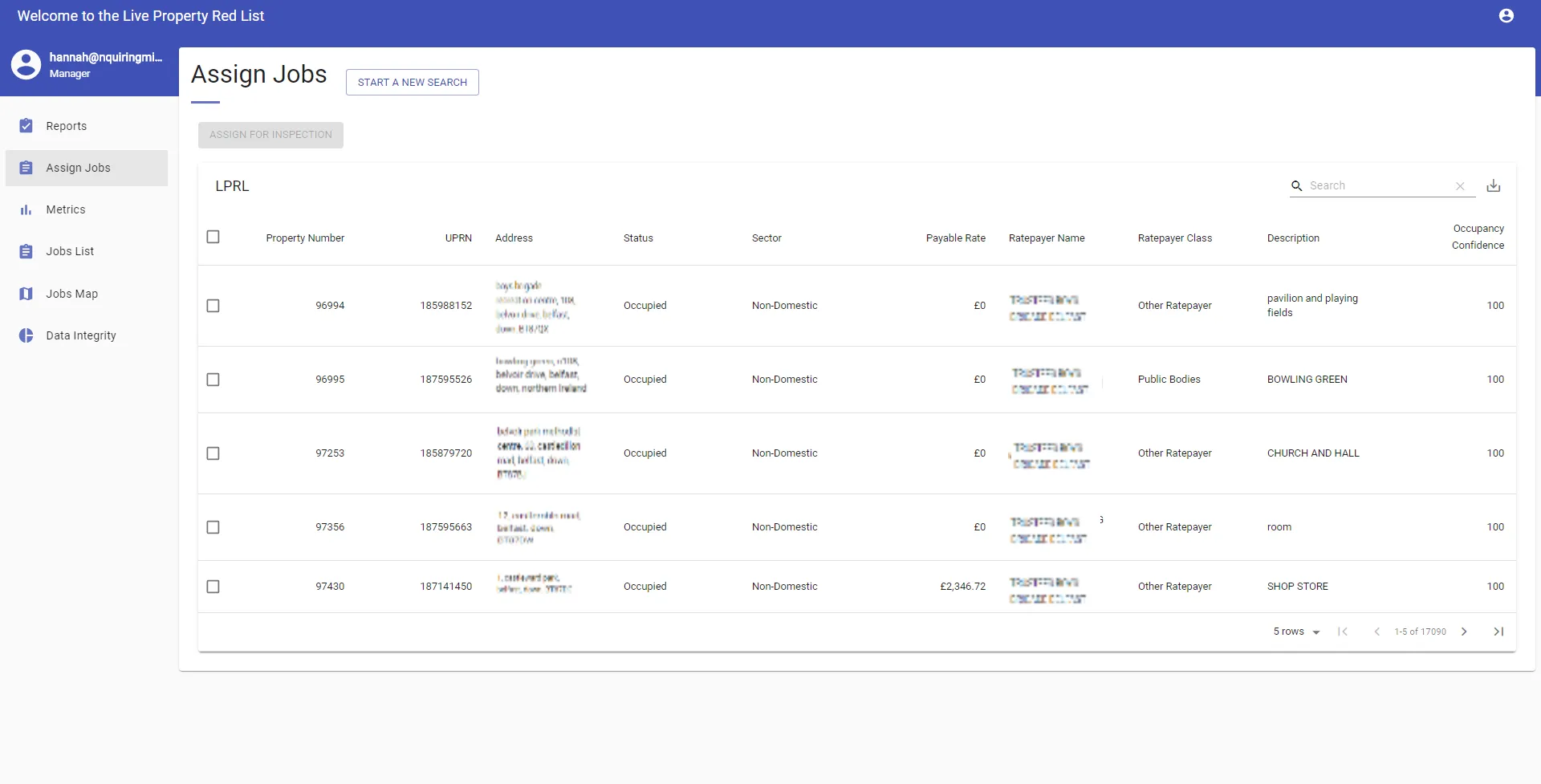
Job management & prioritisation. This module provides a list of every rateable property in the system, presented in a sortable, searchable table with CSV export. Properties can be prioritised on inferred attributes, such as occupancy confidence, as well as their inherent values. The full details of a property can be viewed alongside a complete audit-log history. Jobs can be assigned property by property or in batches, to individuals or work groups.
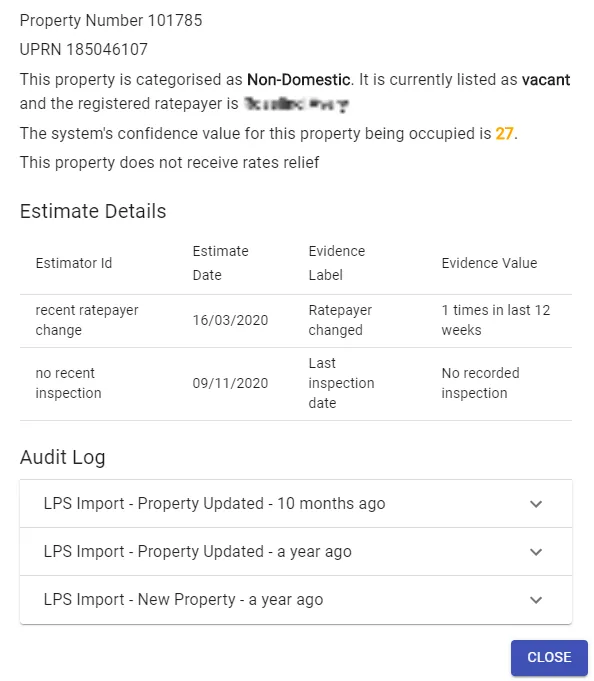
Estimators. The system estimates different parameters associated with a property in order to infer its occupancy, and is designed so that new estimation algorithms can be inserted to infer additional information. The evidence used to arrive at each conclusion is stored alongside estimated values, so inspectors and managers can have confidence in the data provided. The estimator system is supervised in the background by a learning process that uses the results of inspections to fine-tune the confidence it places in different pieces of evidence — so performance improves over time.
Mobile workflow. The mobile workflow module lets inspectors easily capture data while in the field. Designed to work on all mobile devices, it integrates directly with phone features such as camera and location to speed up data capture. Once a report is submitted it is immediately available to managers, allowing decisions to be made on inspection results in real time. The workflow module works equally well on desktop, if inspectors prefer to collect results and enter them later.
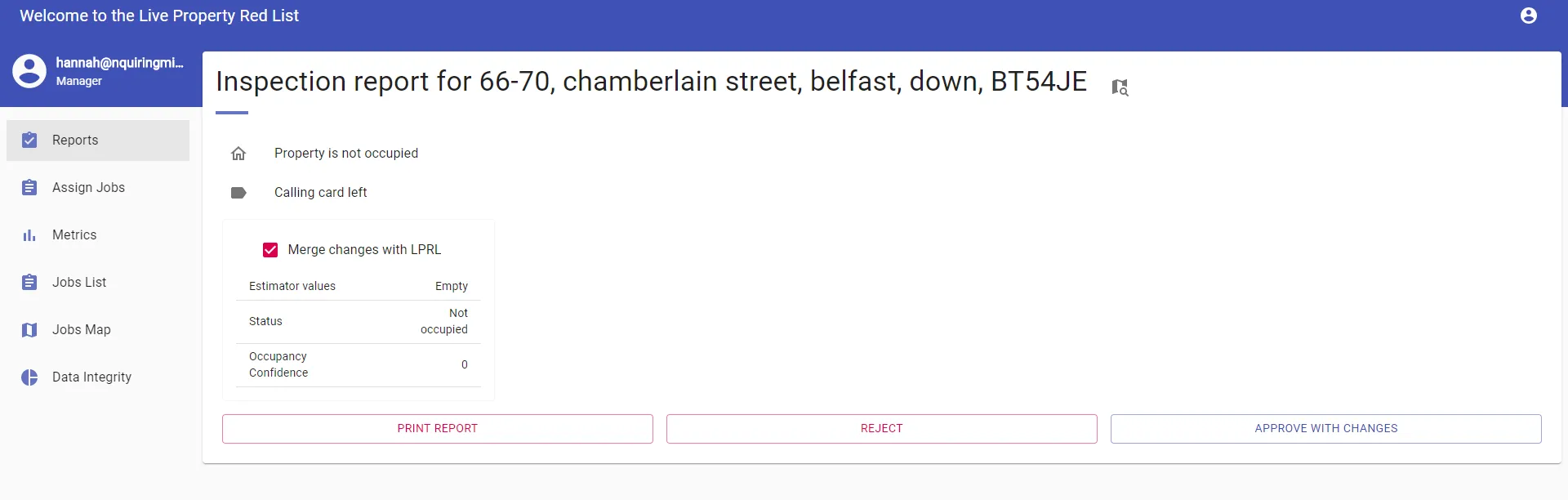
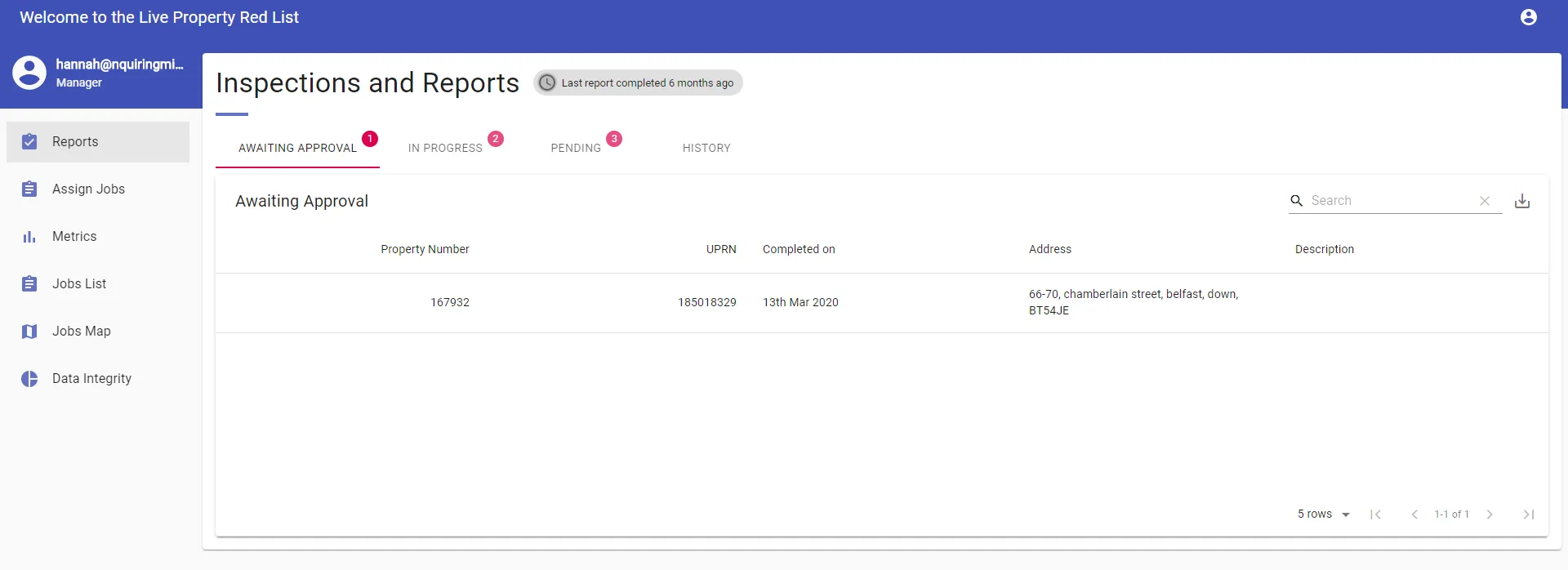
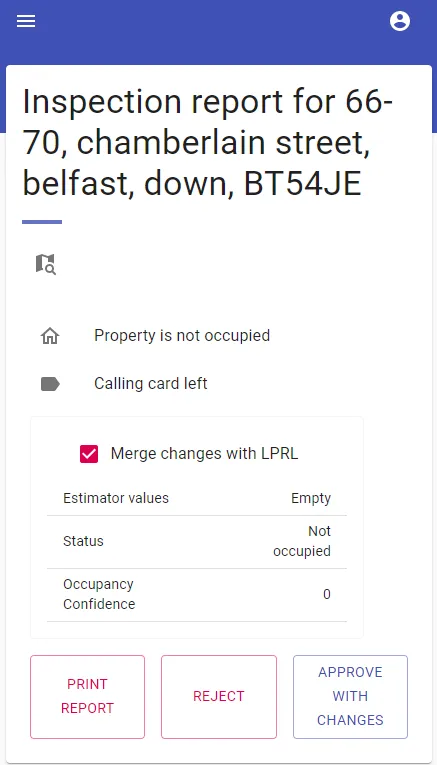
Reports approval. Managers can review the results of inspections before accepting the suggested changes into the system. When viewing a report, all the information collected by the inspector — and the associated evidence — is presented to the manager, who can accept or reject the report, optionally merging the resulting changes into the system. A history of all completed reports is retained for auditing purposes.
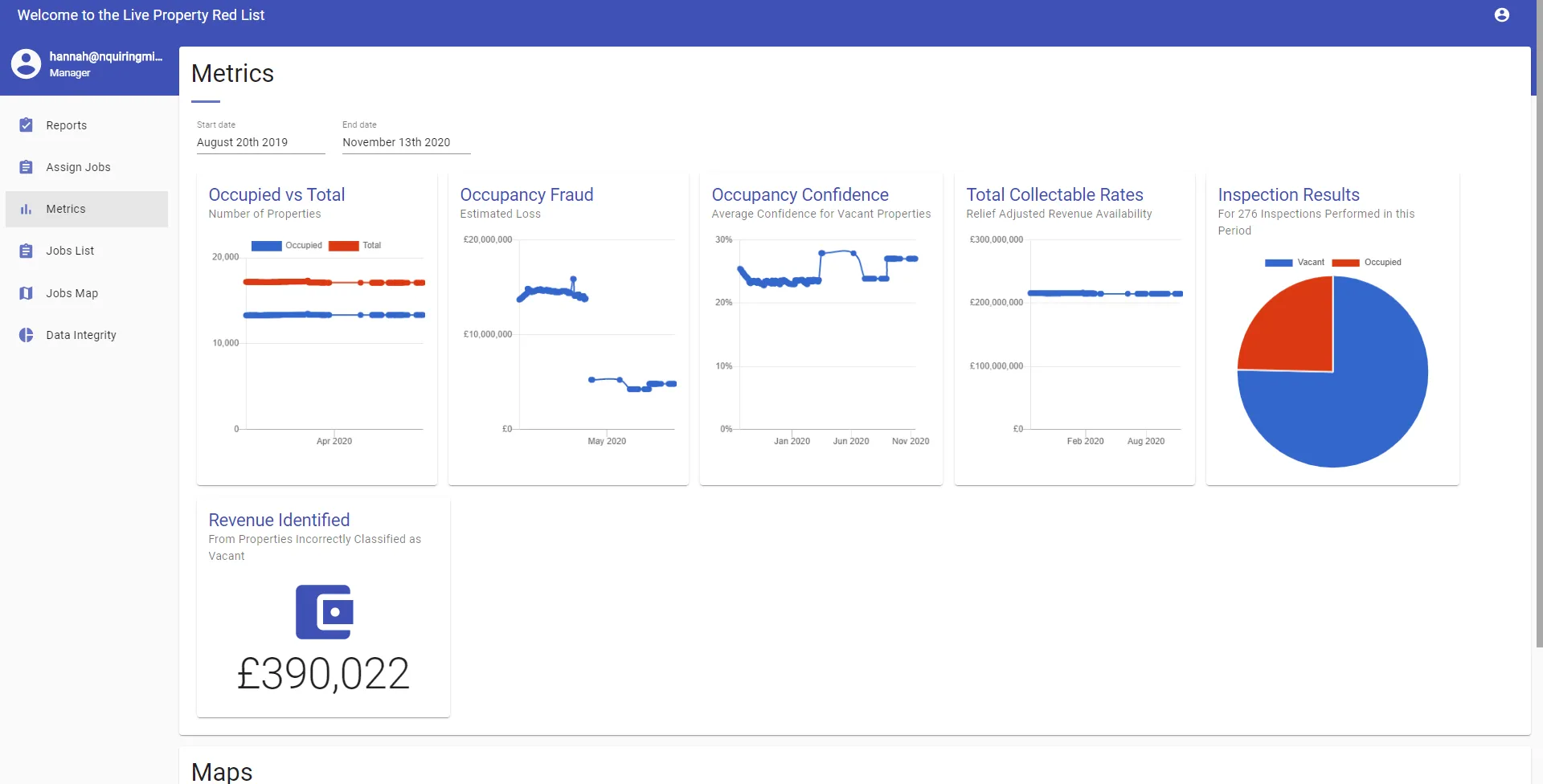
System metrics logs. The system module tracks the status of the data over time, helping to evidence KPIs and inform strategy. The logging function also provides insight into the health of the system and any errors reported from back-end modules.
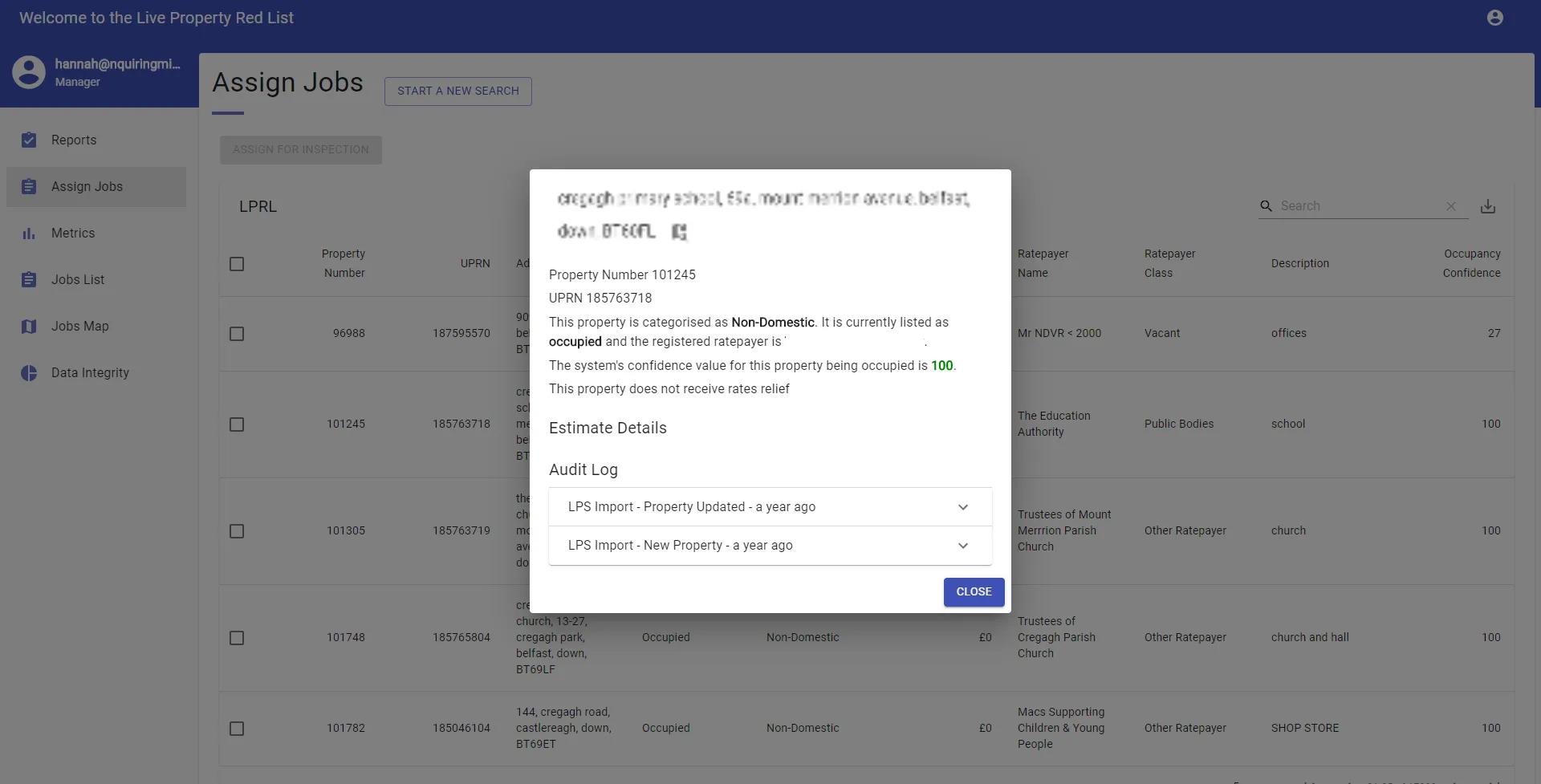
Audit log. When viewing a property’s details, an itemised list of all recorded changes to the property’s record is available, along with the source of each change — import or inspection. This allows an inspector or manager to investigate the source of potential discrepancies in a property’s status.
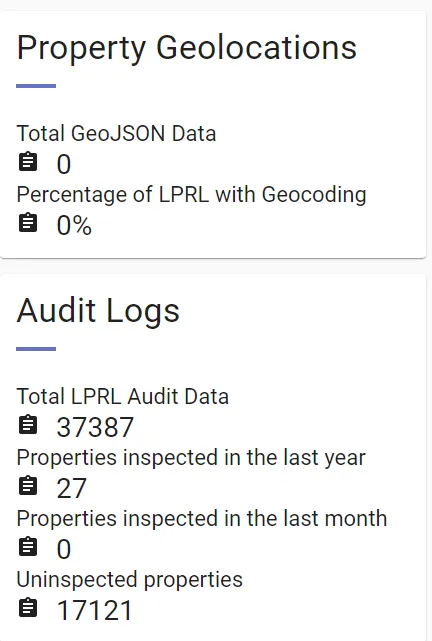
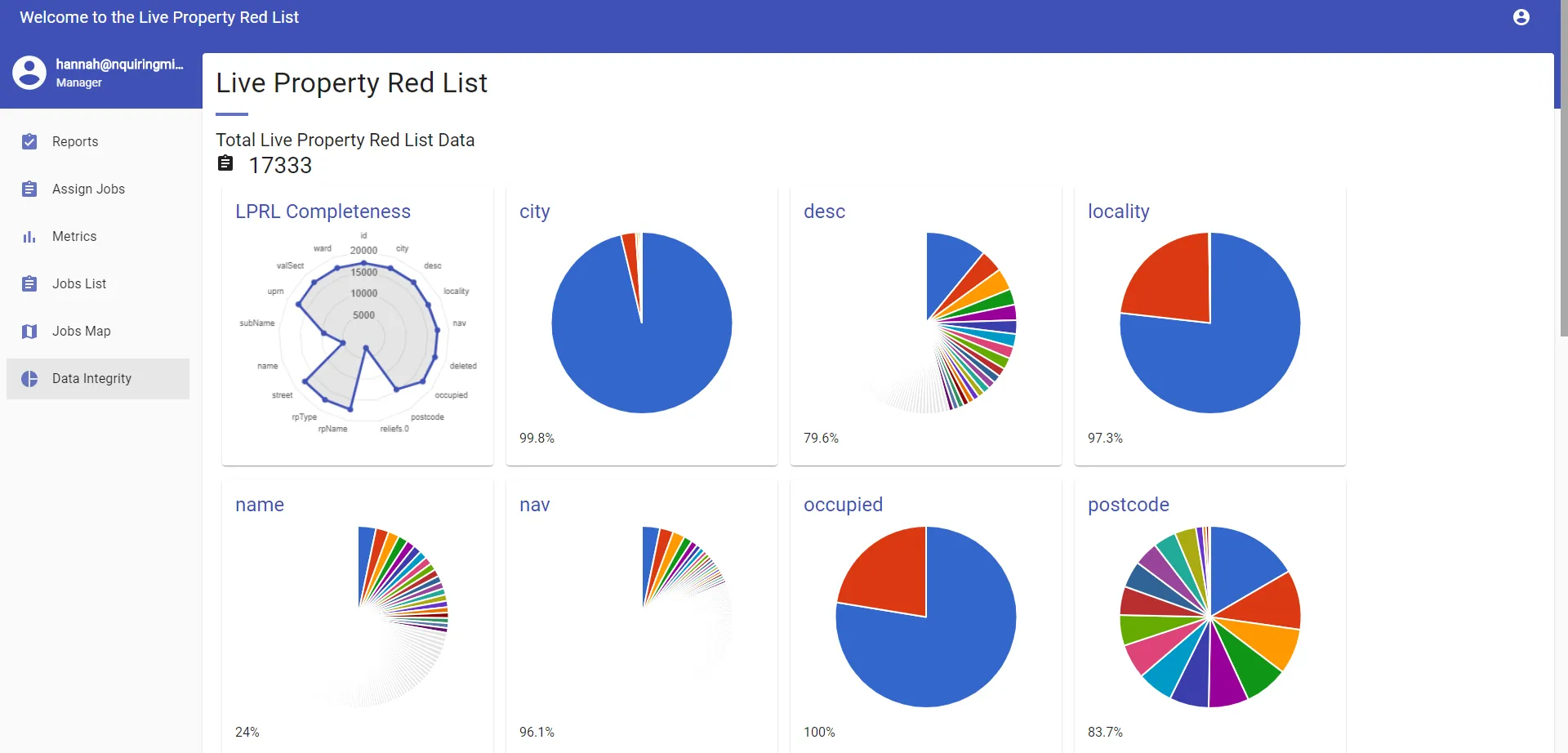
Data integrity. A key factor in improving operational efficiency is the quality of the data available. The data integrity module includes charts and statistics that indicate the completeness and accuracy of data within the system. By understanding where gaps exist in the underlying data, teams can improve their data quality with targeted strategies.
“Business rates provide more than half of Belfast City Council’s annual revenue which is used to fund services, from bin collections to leisure facilities. The timely and accurate collection of rates income, as well as the maintenance of an up-to-date register of businesses in the city, can be challenging.” — Belfast City Council
Award highlights
- One of only two SMEs featured as a case study in the UK Government’s £4.6bn Industrial Strategy Challenge Fund whitepaper (rates collection for Belfast City Council).
- SBRI — selected by the UK Government to develop a data-sharing platform for local government.

Features

Anomaly detection across business-rates datasets (e.g. properties likely misclassified for rates).

Ranked leads for further investigation.

Workflow management and mobile workflow for inspection teams.

Fusion of internal rates data with open datasets (Companies House, planning applications, mapping).

Privacy-preserving multi-agency data sharing combined with actionable collection workflow, not just analytics.
Benefits

~£500,000 of previously uncollected business rates identified in a two-week trial with Belfast City Council — a recurring year-on-year revenue stream for the council and NI Executive.

More accurate business register and reduced uncollected rates for local authorities.

Featured as one of only two SME case studies in the UK Government's £4.6bn Industrial Strategy Challenge Fund whitepaper.

Selected against competition from across the UK and Europe.
Volt features used

AI as first-order elements — fast

ML anomaly detection, pattern recognition and threat identification

strong simple signed schemas

Human in and on the loop

true end-to-end encryption, peer-to-peer, no intermediate server

advanced NIST compliant security


